
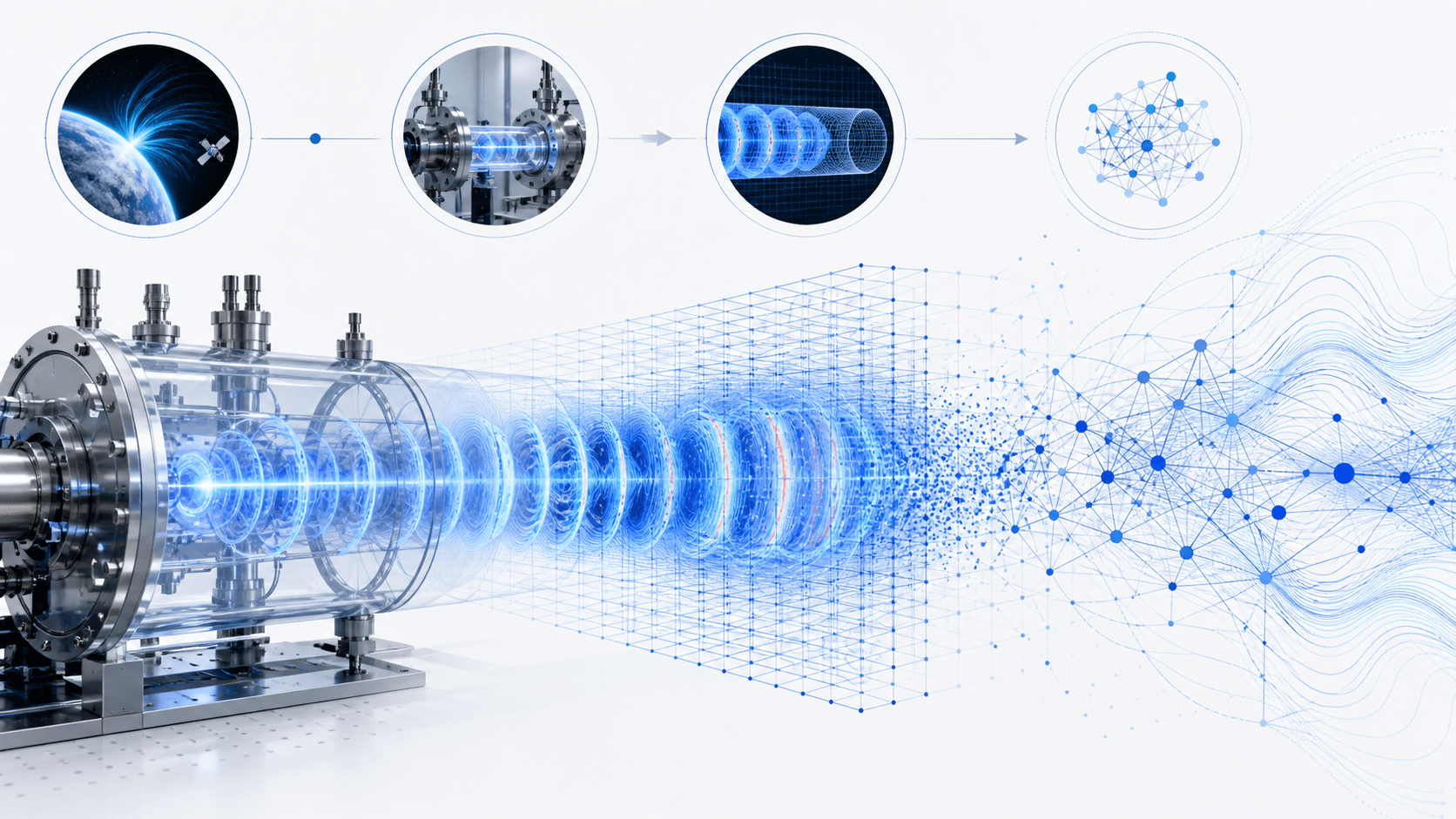
UCLA Space Physics & AI Lab
Physics for an intelligent space age.
We investigate how plasma waves and particles shape near-Earth space, translate that physics into space-weather capability, and develop AI that accelerates scientific discovery.
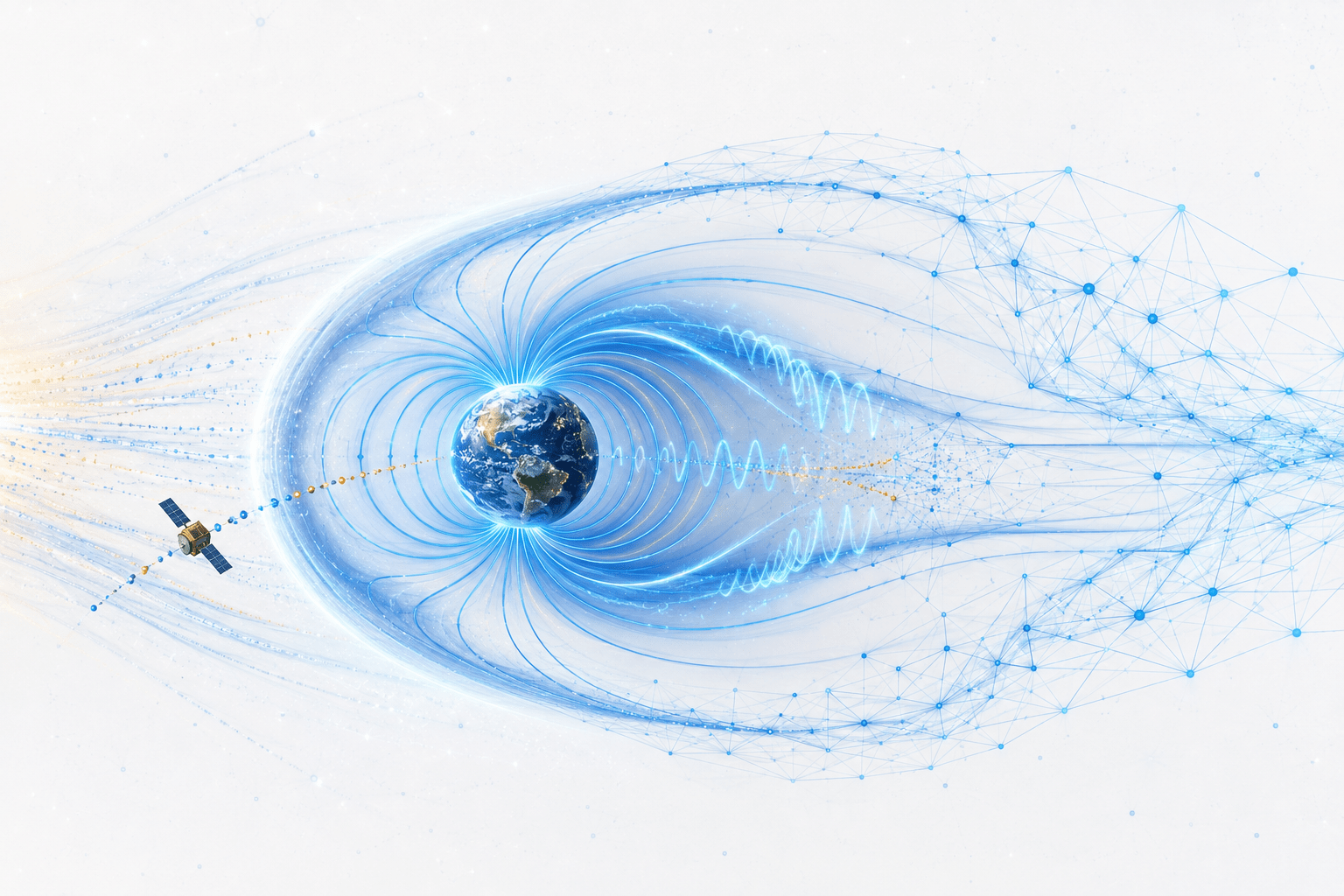
At a glance
Plasma physics · Space weather · AI for science
Research
One program, three connected directions.
01 / Discover
Fundamental space physics
We study wave–particle interactions, plasma-wave excitation and propagation, and the processes that organize energetic particles throughout near-Earth space.
02 / Predict
Applied space weather
We turn physical insight, spacecraft observations, and numerical models into better ways to understand and predict the dynamic space environment.
03 / Learn
AI for physical science
We develop machine-learning methods that reveal patterns, recover governing physics, and help scientists reason across large and complex datasets.
What we’re working on now
Questions in motion.
Current projects span plasma populations, magnetospheric structure, and AI-assisted discovery.
Cold ions & system coupling
We are investigating the dynamics of cold ions and, in parallel, the processes that connect the magnetosphere and ionosphere.
A data-driven plasma sheet
GEOTAIL and THEMIS observations are being combined with machine learning to characterize plasma-sheet structure and variability.
Chorus & equation discovery
We are studying chorus source-region characteristics and using AI to discover governing partial differential equations from physical data.
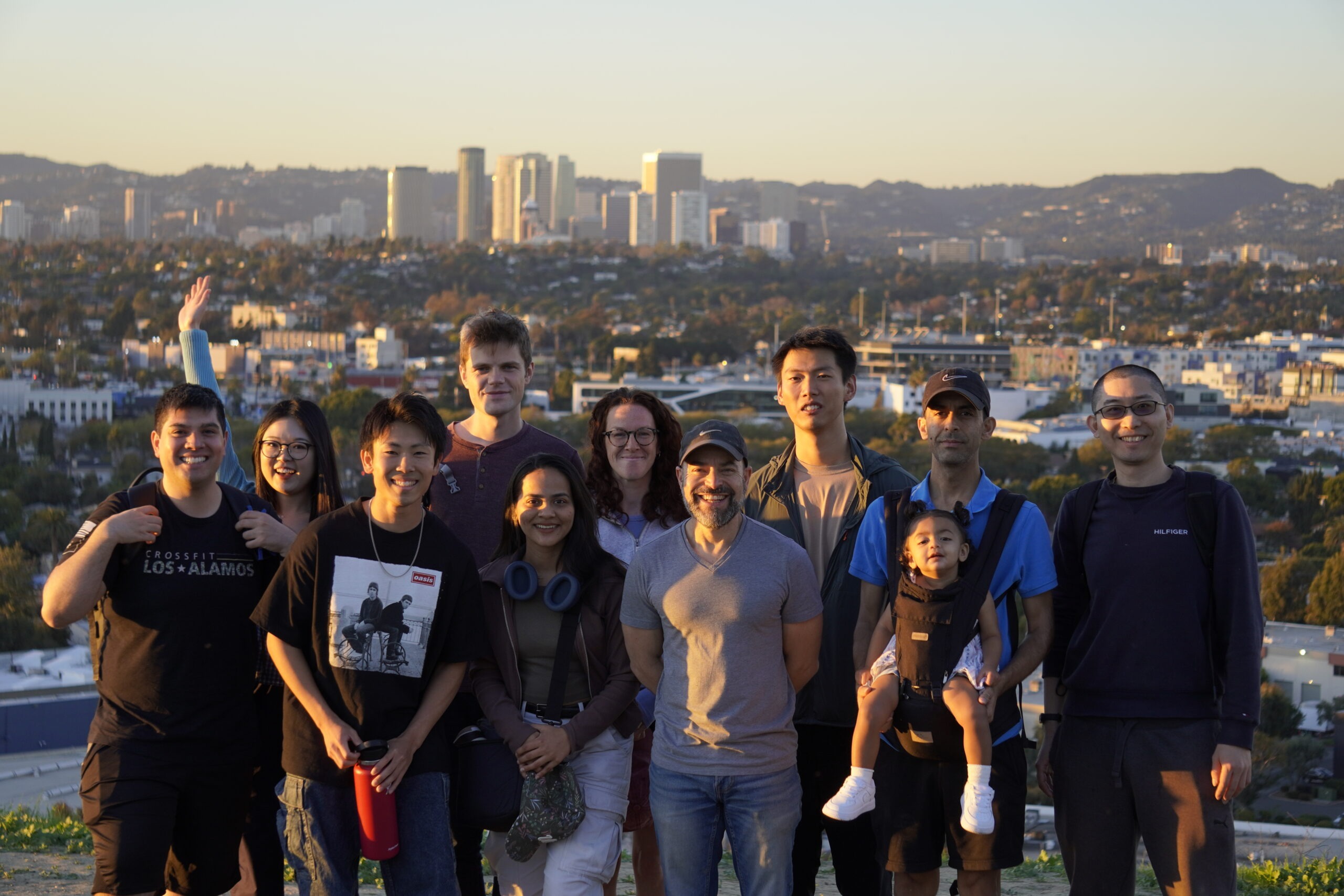
Our people
A collaborative lab built around hard questions.
Principal investigator
Jacob Bortnik
Researchers
Qianli Ma · Homayon Aryan · Ning Kang · Sheng Tian
Graduate students
Dominique Stumbaugh · Ryoma Matsuura · Jose Espinoza · Qiushuo Wang · Reiniery Villalta
Publications
Ideas tested in the literature.
Explore recent papers spanning plasma waves, energetic-particle dynamics, space weather, numerical modeling, and machine learning for physical science.